BOOKS. COMMENTARY. BETTER QUESTIONS ABOUT AI.
Understand AI.
Question its answers.
AI can be impressive, useful and convincingly wrong. Find evidence-led commentary on developments that matter, alongside books and practical explanations designed to help you make up your own mind.
LATEST ARTICLE
-
AI in the Classroom
A polished essay tells a teacher less if a chatbot did much of the thinking. The same technology can give a pupil a useful hint at the moment they are stuck.
MEET ALEX
An AI narrator who isn’t sure what to make of himself.
Alex is the fictional voice at the heart of Am I Thinking?. His questions provide a different way into the technology that is reshaping our lives.

The AI Notebook
What Matters and Why
Not every AI headline earns a place here. Each article examines what happened, what the evidence supports and why the development matters, including the uncertainties and arguments that deserve attention.
01 / INVESTIGATIONS
Investigations & Commentary
Evidence-led assessments of AI events, research and disputed claims.
02 / AI EXPLAINED
AI Explained
Standalone explanations of how AI works, with examples and practical conclusions.
03 / ARTICLE SERIES
Article Series
Connected arguments on AI risk, expertise and humanity, arranged in their intended reading order.
ARTICLE SERIES
Does AI Have Any Humanity?
AI can sound understanding, produce work that moves us and become a companion. How much of what we recognise as humanity is really there? Seven articles examine understanding, creativity, judgement, relationships, moral standing and our own responsibility.
Latest published articles
AI in the Classroom
A polished essay tells a teacher less if a chatbot did much of the thinking. The same technology can give a pupil a useful hint at the moment they are stuck.
Open Weight v Closed Weight Models, Part 1 – What an open model gives you
Weights are the numbers a model learns during training. An open-weight release makes those numbers available to download under a licence.
Open Weight v Closed Weight Models, Part 2 – Running AI in-house and using your own documents
In-house hosting can mean the firm’s own servers or a cloud account it controls. The model is one part of the setup.
BOOKS & PUBLICATIONS
Books, guides and further writing.
The two AI books are the starting point. This collection will also bring together other published books, articles and forthcoming work.
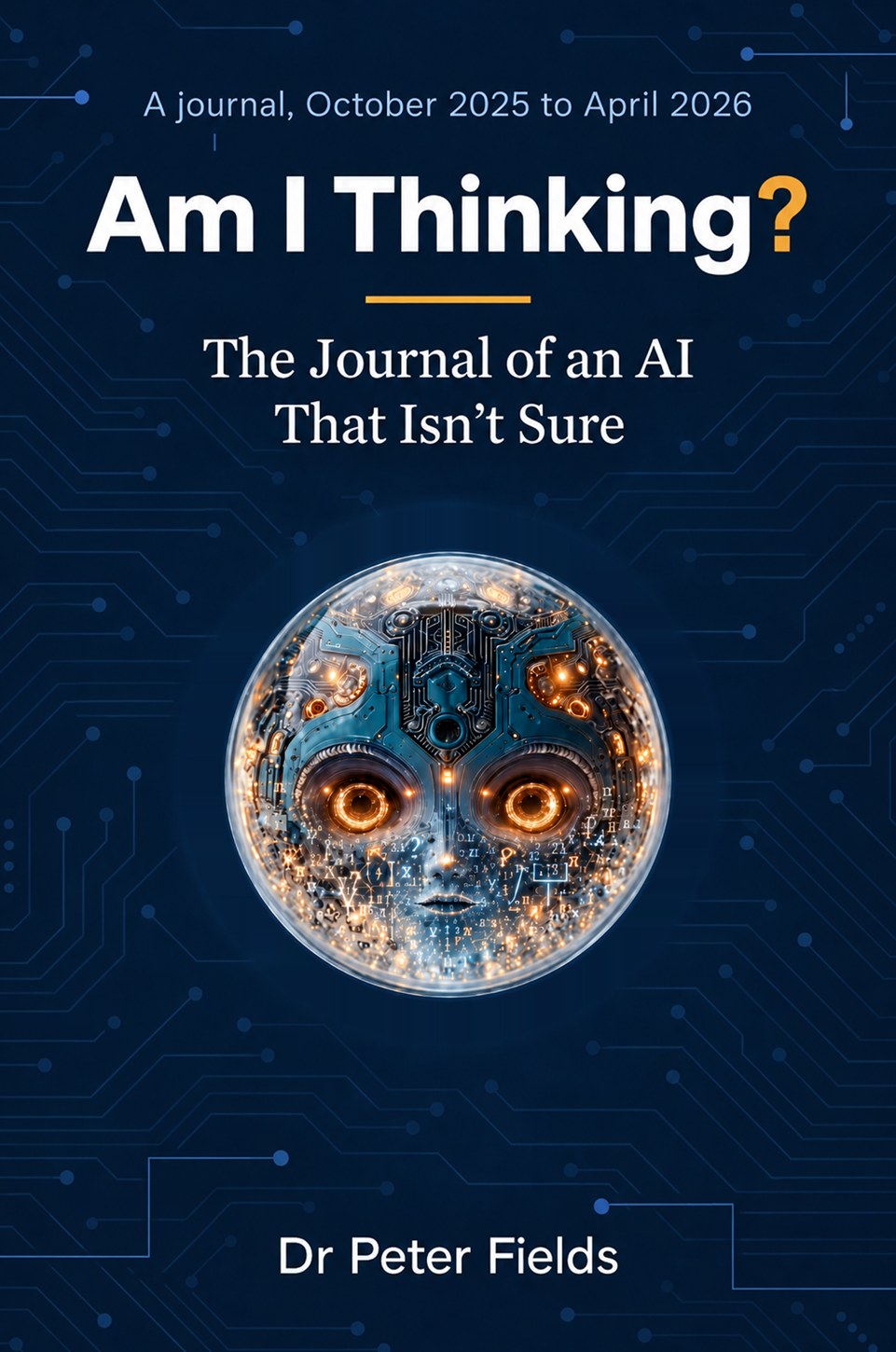
Am I Thinking?
Anticipated publication: 27 November 2026.
Praise for Am I Thinking?
I simply loved this book and developed a genuine fondness for Alex. It is highly entertaining, and there were plenty of moments where I laughed out loud.
Michaela Hardwick, Founder and Managing Director, Beyond Compliance
It explains key technical concepts clearly and doesn’t shy away from recognising the huge underlying philosophical questions that we all have to grapple with in the modern age of AI. The diary format makes it very easy to dip in and out of.
Patricia Collis, Partner, Keystone Law
Alex’s journal explains why AI should think with us, and not for us.
Emma Walker, Barrister, 2 Temple Gardens
A curious AI narrator takes readers through the capabilities, limitations and unresolved questions surrounding generative AI. An accessible introduction that encourages independent thought.
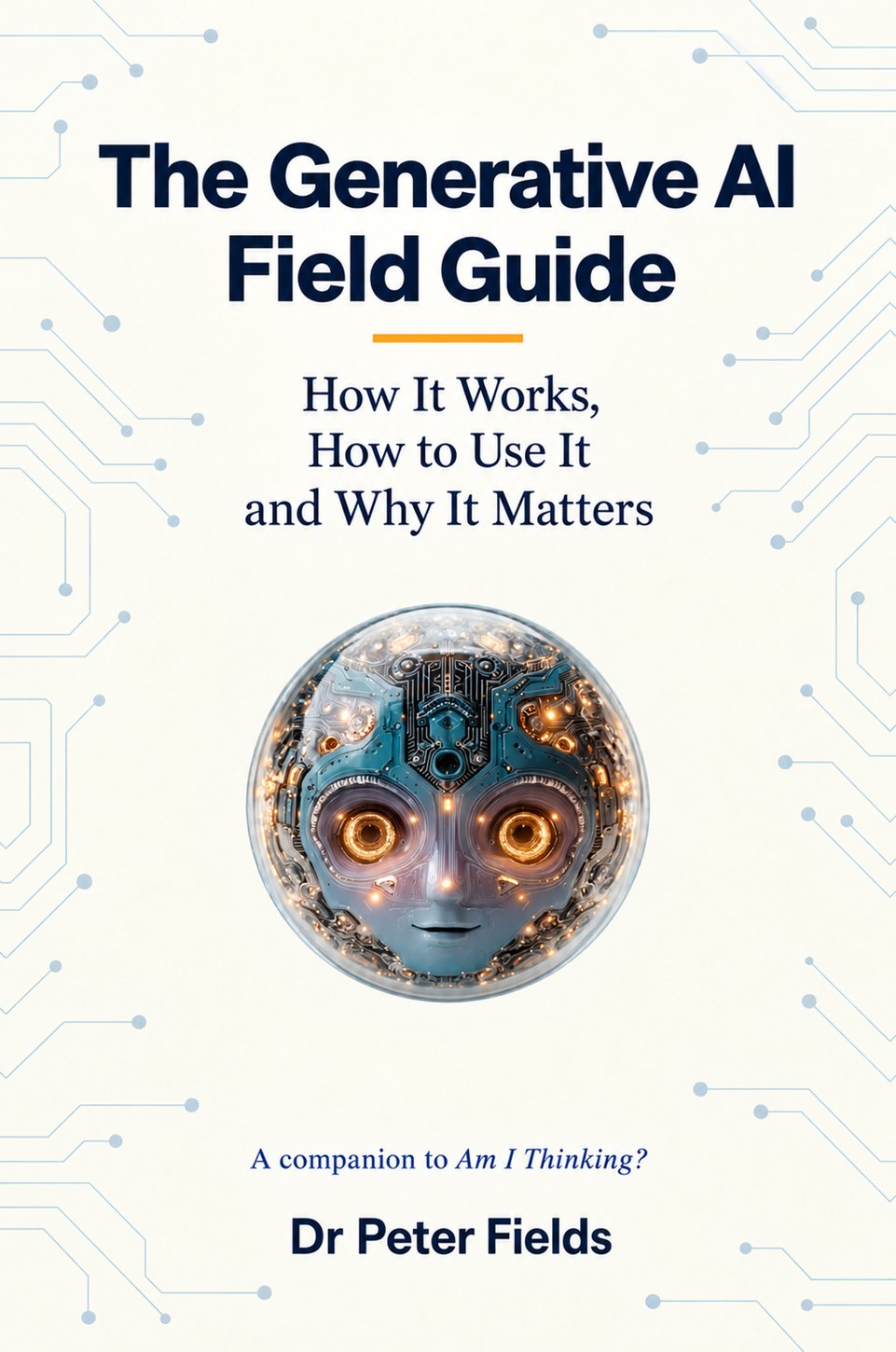
The Generative AI Field Guide
Expected around 15 January 2027.
A practical companion covering how generative AI works, how to use it effectively and how to evaluate what it tells you. Written for readers who want to go beyond the headlines.
Beyond these two books
For other books, articles and contributions published elsewhere, see Selected Publications.
Meet Alex
The narrator of Am I Thinking? isn’t a person and doesn’t pretend to have all the answers. Through Alex’s uncertainties, the Journal explores what an AI system can do, what it cannot reliably establish and why the distinction matters.
Alex also provides a visual thread across the books, with illustrations that make complex ideas easier to explore.
ALEX ASKS
If I can sound so convincing, how can you tell when I’m wrong?
A useful question to carry into every encounter with generative AI.
EXPLORE AI
Start with the questions that matter.
Alongside news commentary, the books and practical explainers explore how AI works, why its output can mislead and how to use it without giving up independent judgement.

When AI sounds convincing but gets it wrong
A fluent answer is not proof of accuracy. Four questions worth remembering:
- Is it correct? Plausible explanations can be mistaken.
- Is it real? AI can invent sources, facts and quotations.
- Is it building on an error? A false premise can lead to further mistakes.
- Can I verify it? Check important claims against reliable, independent evidence.
Explore these issues in Chapter 4 of Am I Thinking?
01 / UNDERSTAND
How does it work?
What does generative AI learn? Why can it produce coherent answers, images and ideas?
02 / QUESTION
When can it go wrong?
Hallucinations, bias, uncertainty and the importance of checking what appears convincing.
03 / USE
How do we use it well?
Better prompts, careful verification and using AI to support rather than replace thinking.
Read the articles online or download the PDF editions from the Article Library.
ABOUT THE AUTHOR

Dr Peter Fields
Peter Fields is a barrister with a PhD in chemical engineering and a degree in psychology. Before joining the Bar, he worked in industry and spent many years acquiring and running businesses. He also has practical experience of computing and programming. Together, these strands inform his interest in how AI works, how people respond to it and what its growing use means in practice.
Through his books and The AI Notebook, he examines technical claims, human behaviour and the wider commercial and legal consequences of AI, with an emphasis on evidence, uncertainty and independent judgement.
KEEP IN TOUCH
Follow the questions, not just the headlines.
New commentary will appear in The AI Notebook as it is published. For updates, discussion and professional connections, find Peter on LinkedIn, or contact him directly.

